DIY Gardening: Starting Seeds in Recycled Egg Cartons

Good news: Ellen Drews is joining us for another gardening tutorial! Last spring, Ellen shared her DIY container gardening technique (pictured below). Today, she’s going to teach us how to start our own seeds in egg cartons! Have you ever done something like this before? I can’t wait to give it a try!

Before we get to her wonderful post, I did want to take a second to let you all know that Anne and I leave for Greece tomorrow! (Follow me on Instagram to see some pictures of our trip.) We will be home in three weeks, and I’ll be back to blogging in late July with more projects, recipes, and some pictures from our trip. I’ve got an exciting collaboration and giveaway coming your way later this summer!

Without further ado, Ellen:
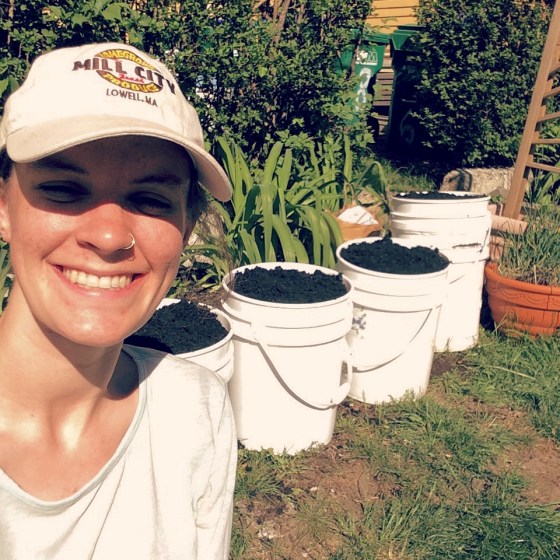
As a backyard vegetable gardener in Somerville, Massachusetts, I am always cooking up ways to feed my gardening addiction on a tight budget. I love finding ways to use recycled materials to grow my vegetables safely in the city. This year in my container garden, I decided to see the process from start to finish. I was going to start my own seeds in my own DIY greenhouses: egg cartons!

Starting seeds indoors is an important concept for vegetable gardening. There are some vegetables that prefer to grow right where they’re planted (i.e. cold-tolerant plants like spinach, or delicate root-crops like carrots). For these crops, I put seeds directly into my container garden as soon as the soil has thawed.

Other plants must be started indoors and then transplanted to the outdoor garden as seedlings, such as tomatoes, peppers, eggplant, and basil. These warm-season crops evolved in hot climates with longer growing seasons and so they have a long, leisurely lifespan. Where I live in New England, we can have frosts as late as Memorial Day, which would most likely kill a seedling before it had a chance to bear any fruit—the ultimate prize of the tomato plant. Starting tomato seedlings indoors as early as April allows you to get your plants going so they will reach fruiting maturity by midsummer.

Seedlings are available for purchase at farmers’ markets, grocery and hardware stores, and big-box stores like K-Mart. However, there are awesome benefits to starting from seeds:

  • Choose varieties! There are thousands of beautiful heirloom seeds out there and many cool ones are available through seed companies with the mission of saving these varieties (Seed Savers Exchange, Hudson Valley Seed Library, High Mowing Organic Seeds, and Baker Creek Heirloom Seeds are some of my favorites).
  • Save money on fancy organic seedlings and use the seeds you already have. I’m still using seeds that I bought or traded two years ago (with proper storage, seeds can last up to 5 years).
  • Avoid the pitfalls of buying cheaper, mass-distributed seedlings at stores like Home Depot and K-Mart. Devastating diseases can spread across the country via these discount seedlings. For example, in 2009, late blight on tomatoes spread across the east coast because many people bought tomato seedlings from K-Mart, Walmart, and Lowe’s—all of which carried a fungus originating in a handful of greenhouses in Alabama. (Read one article about it here.)

So, now that you’re convinced that starting your own seedlings at home is a good idea, I’ll show you how I started mine this year!

Starting Seeds in Recycled Egg Cartons

Materials:

  • Plastic or cardboard egg cartons, empty (avoid Styrofoam or heavily inked cartons)
  • Nail or awl
  • Organic potting soil or mix (Look for varieties that contain compost. You want your seeds to access as many nutrients in their little cells as possible.)
  • Seeds!
  • Spray bottle or watering can with a gentle sprinkle

Step 1: Using the nail or awl, punch three holes in the bottom of each egg cell to allow excess water to drain.

Step 2: Fill the egg carton cells with the potting soil. Use your fingers to gently press divots into each cell and re-fill the divots with more potting soil. You want to give your seeds as much material in each cell as possible without compacting the soil. For many weeks, the nutrients in the soil will be all they will get so you’ll want to fill ‘em up!
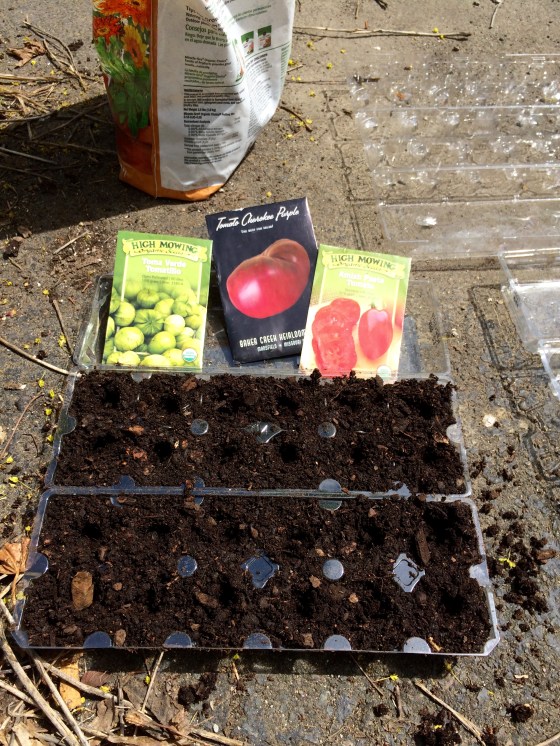
Step 3: Put 1-2 seeds in each cell, following the directions on the seed packet for how deep to put them (it will be under “seed depth”). Cover with a light topping of potting soil.

Step 4: Soak the cells with water using a spray bottle or a gentle sprinkle of water. You want water to drip out of the holes at the bottom of the egg carton to ensure that you have really soaked all the soil. BUT you also want to be careful that you don’t dislodge the seeds or compact the soil so it’s important to be gentle when watering!

Step 5: Place egg carton seed-trays indoors in a sunny window or under grow lights. Seeds should germinate in about a week! I also got fancy and used the lid of the egg carton to create a greenhouse effect over my seeds. The plastic roof kept moisture in and trapped some heat from the sun. I also punched holes in this “greenhouse” roof to keep things from getting way too humid in there.

Here’s what my tomatoes and tomatillos looked like after they grew up a bit! Now that it’s June, it’s a bit late for starting tomatoes, peppers, and eggplant like I did here, but it is a great time to start seeds for fall crops such as broccoli, cabbage, collard greens, chard, fennel and kale.

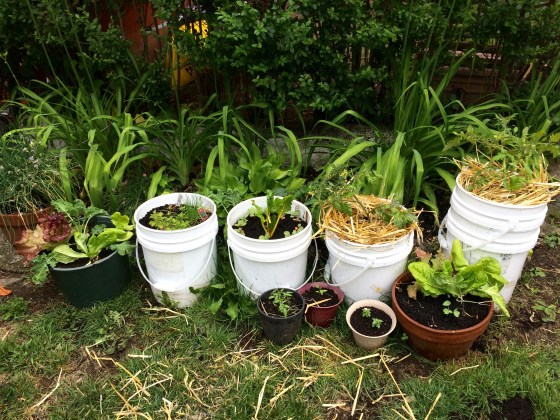
And here’s what my garden looks like today!
Leave a comment if you’ve found other ways to use recycled materials in your garden!
Note: All photos were taken by Ellen Drews.

DIY Travel Backgammon & Checkers

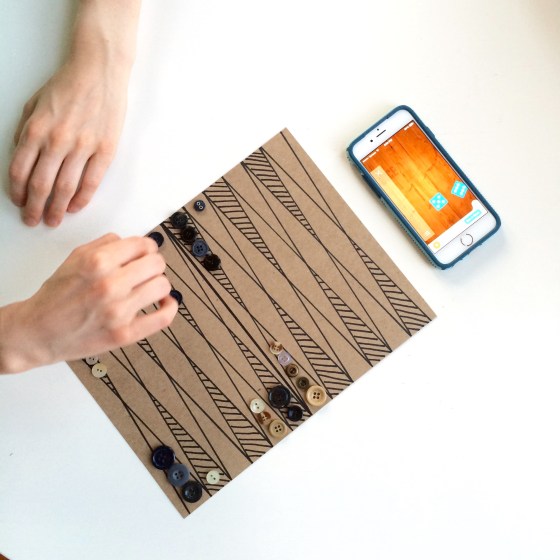
As Anne and I get ready to leave for Greece (8 days!), I’ve decided that our packing list should include games we can play on our trip. Playing cards are a no-brainer, but I was curious how I might go about creating a travel-friendly backgammon and checkers board. Backgammon is widely popular in Greece, so learning to play is something I’ve been very interested in. Checkers I already have down pat.

After scouring the Internet and a local art supply store to get ideas on how to make this vision a reality, I ultimately settled on a design that is freakishly easy. So easy that creating a blog post tutorial on it is almost cheating. I wanted to use materials I already owned, though, so creating two board games for $0 is a win in my book! The supplies are few, and the steps quite easy.

This board game takes up virtually no room in your travel bag, and is sure to be fun no matter where you are: a local taverna, the beach, your room, a long plane ride, etc.

DIY Travel Backgammon

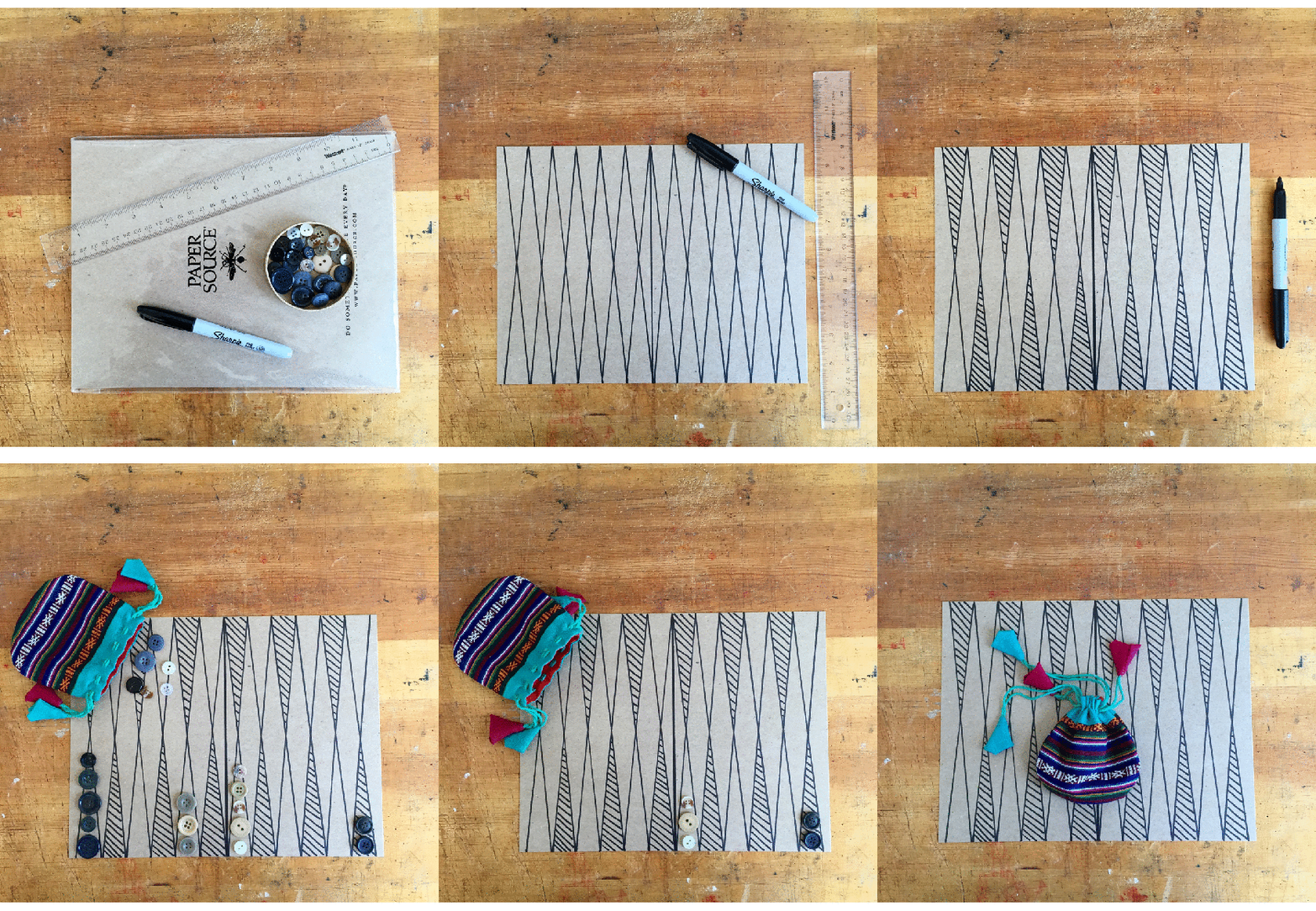
Materials:

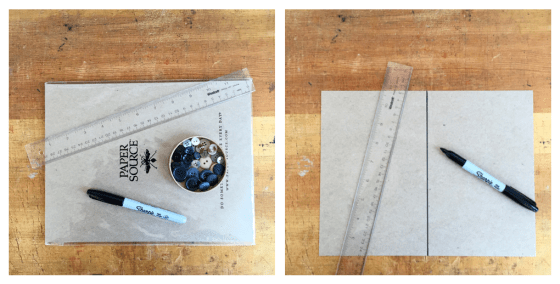
  • 8.5″ x 11″ chipboard (I purchased mine here)
  • Pencil
  • Sharpie marker
  • Ruler
  • 30 buttons, 15 each in two colors (or any other checker-type object)
  • 2-4 dice, depending on what style backgammon you are playing (or download this dice app if you’ll have wifi on your trip)

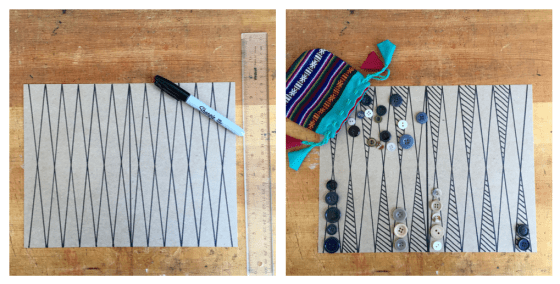
Step 1: Using a pencil and then a Sharpie, draw a thick line down the short side of the chipboard at 5 1/2″. To make this as accurate as possible, make a tick mark at 5 1/2″ on either long edge of the board. Then, connect the dots.

Step 2: Working outward from either side of the thick line, use a pencil to make six tick marks every 7/8″. There should be 24 tick marks in total.

Step 3: Use the ruler and Sharpie to begin creating the backgammon points (or triangles). Place the board in landscape position. The long edge closest to you I will call Side 1, and the farther long edge will be called Side 2. Connect the farthest left tick mark on Side 1 to the second most left tick mark on Side 2. This should create a diagonal line. Continue this across the board to create 12 parallel lines. Next, go back and create 12 more parallel lines going in the opposite direction (i.e. connect the second most left tick mark on Side 1 to the farthest left tick mark on Side 2).

Step 4: Create the two-toned backgammon board by filling in every other point with stripes. The points facing each other should be opposite colors.

DIY Travel Checkers

Materials:

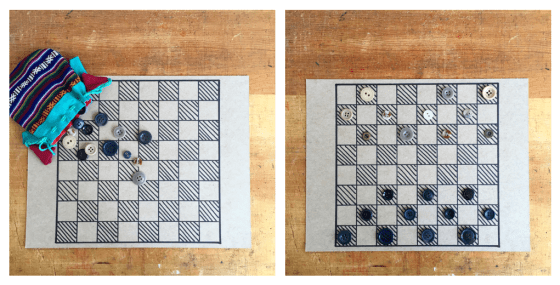
  • See above! This board requires the same materials as backgammon, except only 12 checkers each.

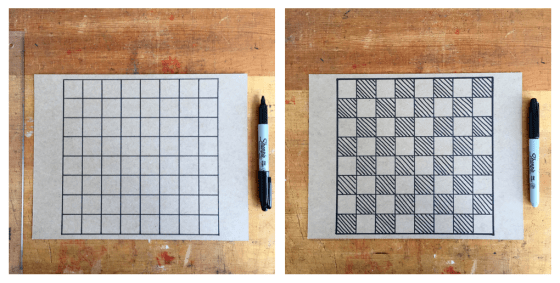
Step 1: Turn over your brand-new backgammon board to the blank side of the chipboard. Create an 8″ x 8″ square using the ruler, pencil, and Sharpie.

Step 2: Make tick marks every 1″ along all four sides of the square. Create smaller squares by connecting all opposing tick marks. There will be 64 squares total.

Step 3: Create the two-toned checkers board by filling in every other square with stripes. No striped square should be touching another striped square.

P.S. Have you seen my DIY Scrabble game? It was the subject of an early blog post on Scissors & Sage, but it might be one of my favorite projects ever.

Print Your Own Recipe Cards

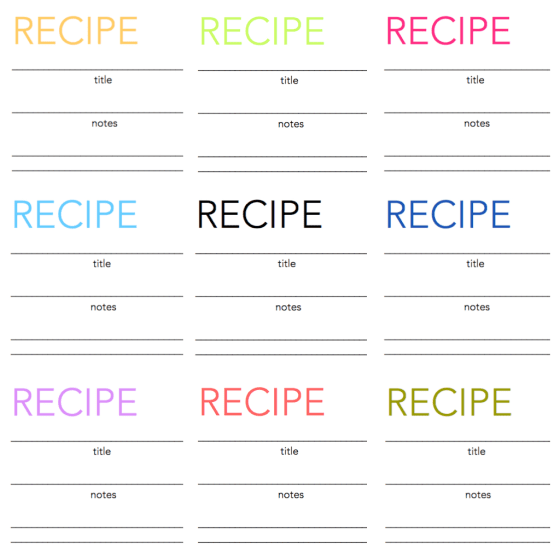
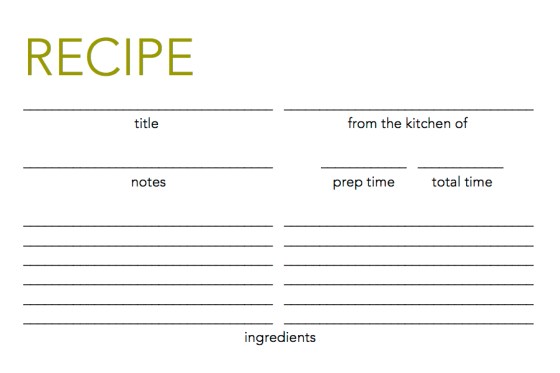
This week I decided to try something new and make my very own recipe cards! I’m the recent owner of a beautiful recipe box, so these cards are a natural accompaniment. While the process was painstaking at times, I am so happy with the end result. I used Microsoft Word to create my template, and I customized the nine colors you see above. I wanted to create a clean, distraction-free design for ease of writing. It’s up to you to add your own flare, whether it’s an artsy doodle of a delicious pie, or your own elegant hand lettering.

Let’s talk logistics. This recipe template is 4″ x 6″. (You can, of course, print it smaller or larger using the scale option when printing.) It’s best to print the cards on either text weight or cover weight paper. To print the card double-sided, first print page 1 of 1 only. Then, feed the same paper back into the printer and only print page 2 of 2. Once your recipe cards are printed, cut them, leaving a 2/8″ border on the left and right, and a 3/8″ border on the top and bottom. This will create an exact 4″ x 6″ recipe card.

These recipe cards are meant to be versatile. Print all one color, or print one of each! Use them for your own recipe collection, or give a whole blank set as a gift. The options are limitless!

Now, I want to see how you use your printed recipe cards! How will you fill them in? What are you cooking and baking this season? Share your cards on Instagram using #scissorsandsage and I’ll repost them!

Cantaloupe

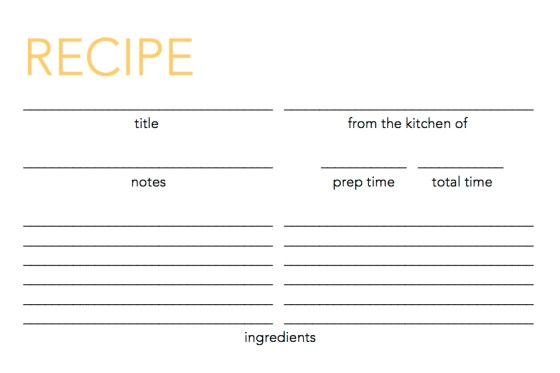
Here is what the back of each recipe card looks like:

Click here to download and print Cantaloupe.

Honeydew

Click here to download and print Honeydew.

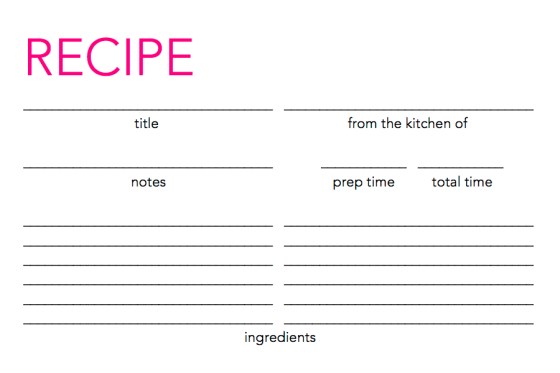
Strawberry

Click here to download and print Strawberry.

Sky

Click here to download and print Sky.

Licorice

Click here to download and print Licorice.

Blueberry

Click here to download and print Blueberry.

Lavender

Click here to download and print Lavender.

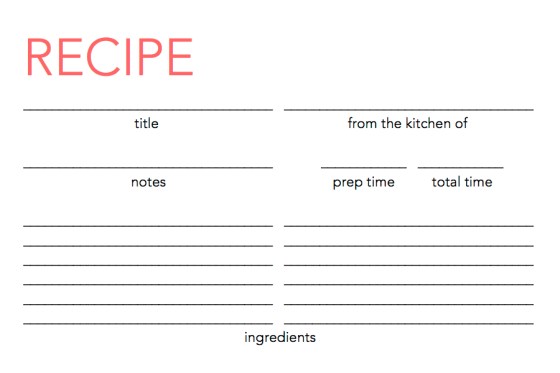
Salmon

Click here to download and print Salmon.

Asparagus

Click here to download and print Asparagus.

Don’t forget to share your recipe cards! I’d love to see how you fill yours in. Tag them with #scissorsandsage and I’ll repost them!

Mini Caprese Frittatas

A few weeks ago, I brought these homemade mini caprese frittatas to a brunch with some coworkers. They went over so well that I thought I’d share the recipe with you here! These frittatas are perfect for this time of year, with fresh basil and cherry tomatoes quickly coming into season. They’re delicious served hot or at room temperature.

Mini Caprese Frittatas

Prep time: 15 minutes | Bake time: 22 minutes | Yields: 12 mini frittatas

Ingredients:

  • 6 eggs
  • 1/3 cup milk
  • 1/4 tsp salt
  • 1/8 tsp pepper
  • 1 tbs pesto
  • 1 1/2 cups grated mozzarella
  • 12 cherry tomatoes

Preheat oven to 350°F. Coat a standard 12-cup muffin pan with cooking spray and set aside. Cut cherry tomatoes into thin coins and set aside.

In a large mixing bowl, combine eggs, milk, salt, pepper, and pesto. Whisk until fluffy, 1-2 minutes. Pour the egg mixture into the muffin pan, filling each cup approximately 1/3 full.

Bake for 10 minutes. At the 10-minute mark, sprinkle mozzarella evenly over each muffin cup. Put back in the oven and bake for 10 more minutes.

When the frittatas have cooked for a total of 20 minutes, place cherry tomatoes on top of each frittata. (The frittatas might be puffed up, but that is okay.) Once the cherry tomatoes are added, turn the oven to broil for the remaining two minutes.

Let muffin pan cool for five minutes before transferring frittatas to a cooling rack. Eat promptly, or at room temperature. Enjoy!

From Scissors & Sage