Flip Clock Screen Saver e-DIY

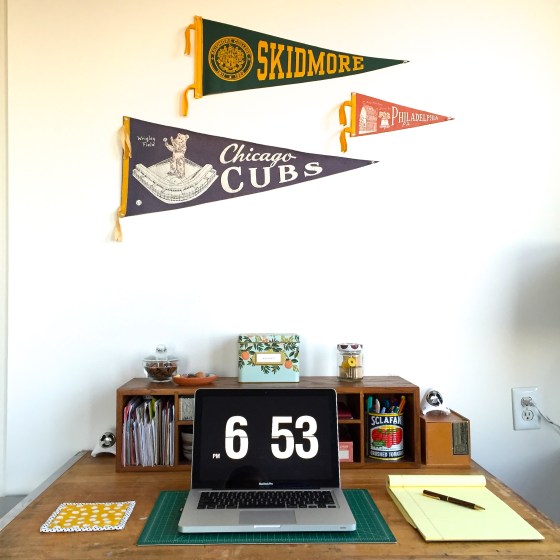
For years, I have seen this black and white flip clock screen saver all over Pinterest. I searched my computer’s settings high and low for this screen saver. Where could it be? I thought. I gave up after some time, thinking it was just something I would never figure out. It haunted me because every cool blogger and interior designer seemed to have this screen saver. It makes photos of your desk look so much cooler.

A few months ago, I decided to dive back into this screen-saver-finding quest. Lo and behold, another blogger, Katrina Chambers, wrote a tutorial on how to download and install it! It’s quite easy once you know where to find it, so let me walk you through how I did it in under five minutes.

Flip Clock Screen Saver e-DIY (for Mac user*)

  1. Visit Fliqlo and click the three little lines in the top right corner of the webpage. Click “Download for Mac.” Close your Internet browser.
  2. Open the downloaded “fliqlo_161.dmg” icon, which should either be on your computer desktop or in your Downloads folder. Double click “Fliqlo.saver” and press “OK” if it cannot be opened due to security preferences.
  3. Open System Preferences on your computer and click “Security & Privacy.” Click “Open Anyway” and then “Install.”
  4. When the screen saver page opens in System Preferences, scroll down and click the “Fliqlo” icon. Click “Screen Saver Options…” to adjust settings like digit size and 12- vs. 24-hour clock.
  5. Once you are finished, you can move the downloaded items to the trash, as they are no longer needed!

*For Windows users, follow Katrina’s tutorial here. The steps vary slightly.


That’s all there is to it! You can also download the flip clock for your iPhone and iPad from the App Store here. Now go forth and get this screen saver! It is sure to liven up any workspace.

In The Studio With: Early Bird Designs

Today, I am so excited to introduce you to the second business owner in my small business profile series. Her name is Jill J. Burns, and she is the founder of Early Bird Designs, a stunning line of fine handmade porcelain wares. Jill is based in Worcester, MA, and happens to be the mother of one Elaine Burns — who taught us how to prepare our own floral arrangements a few weeks back!

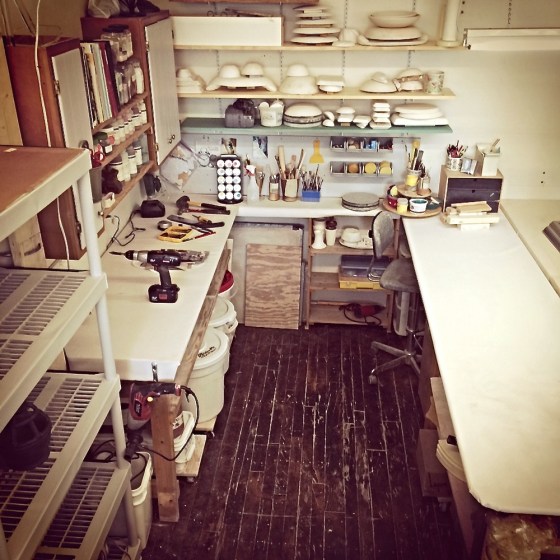
Jill works out of a community ceramics studio that she founded called The Fire Works. Fittingly, it is located in a repurposed factory building known as the Sprinkler Factory. When this factory was up and running long ago, it manufactured sprinkler heads and other fire suppression equipment. Thanks to Jill’s creative vision and entrepreneurial spirit, today The Fire Works houses an eclectic mix of artists and small businesses. How thrilling!

Below is an interview I conducted with Jill via email. She has also shared photographs of her work. You can find Jill’s porcelain wares for sale on Etsy and ScoutMob. (For a full list on where to find her work, visit her website.) As you’ll see, her aesthetic is incredibly beautiful!

Tell me about your journey with ceramic arts.  How did you originally become interested in it? Is this what you went to school for?

I did go to art school, but I studied painting. I never even took a ceramics class in college. As newlyweds, my husband and I moved to Worcester, and I took a class in ceramics at the Worcester Center for Crafts. But, I have to say that from the beginning I was hooked on the potential of clay – expressive and functional. I worked in wheel-thrown stoneware using atmospheric firings for a long time, and it was not until recently that I changed the direction of my work.

Tell me how your work changed. Do you have a favorite material to work with?

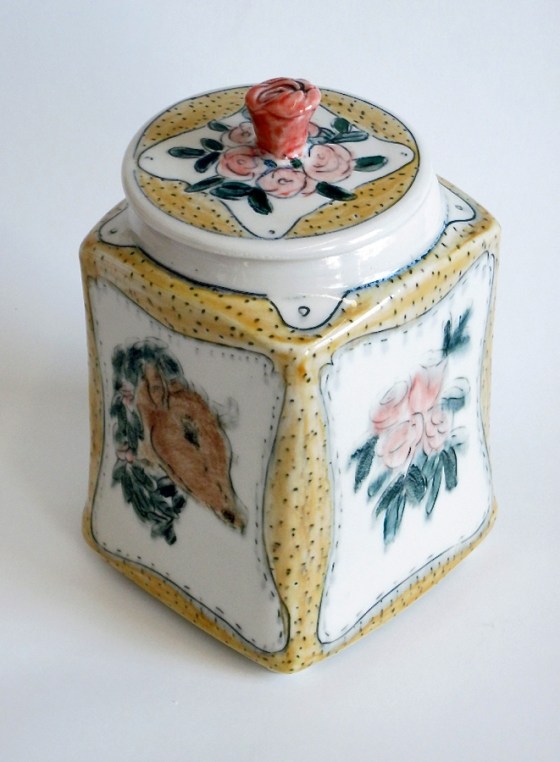
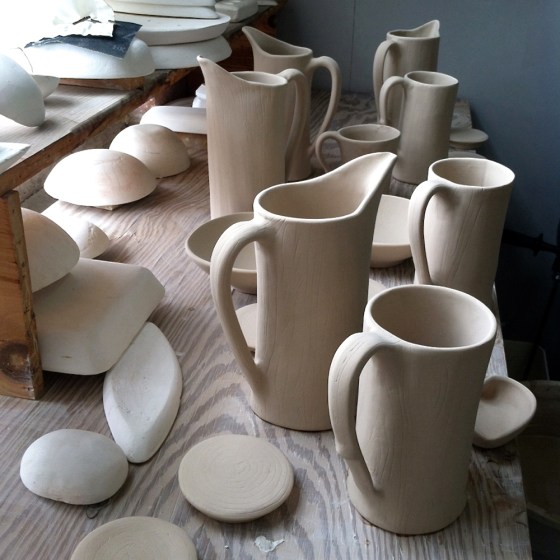
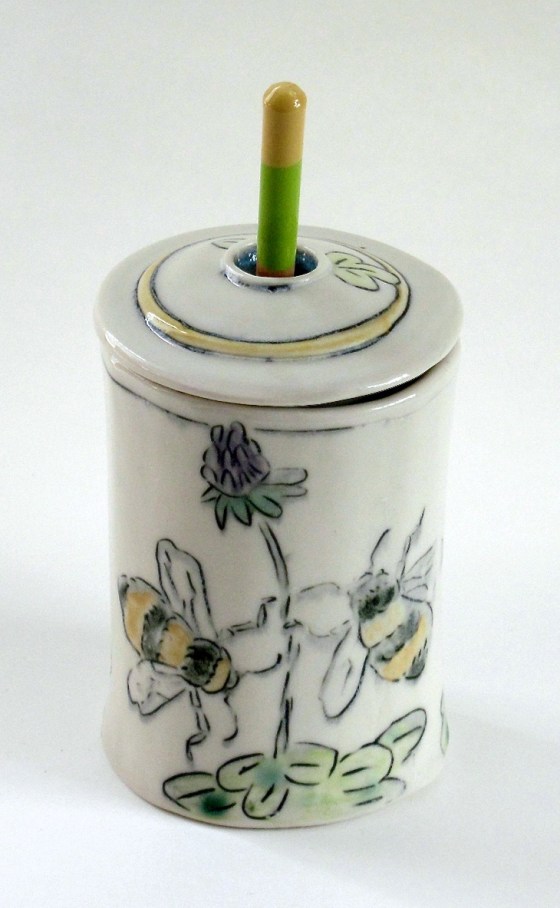
Now I work exclusively in porcelain and most of the pieces are slab-built. I have a love/hate relationship with porcelain. It can be persnickety but, like all relationships, you get used to the quirks. The bonus of porcelain is the smooth white surface it provides. I use a slip inlay technique that allows me to draw directly on the clay. The lines are actually carved and inlaid with dark clay, so the illustration is integral to the piece. Many commercial ceramics use decals to add design elements that lie on the surface. This technique adds a depth that is a hallmark of handmade.

Your designs are incredibly beautiful.  What, or who, inspires your work the most?

The imagery evokes many kinds of flora and fauna. I look to 18th and 19th century botanical and animal engravings for sources. I want the drawings themselves to have a naïve quality – sort of a casual vintage aesthetic. It is impetrative that the pieces are functional, too. I want my customers to feel they can use my pieces every day; that the mug feels good in their hand so they select it first out of the cupboard. For that, I look to many ceramic artists and designers.

Could you tell me a little bit about the group studio you opened, The Fire Works?

About ten years ago, I was finishing an artist-in-residency at the Worcester Center for Crafts. To continue with ceramics at that point I was going to need a studio. There wasn’t anything in my community, so I built one. I figured there were others like myself–artists who have really reached the end of guided classroom instruction but needed space and equipment. An added benefit was the community it created. Artists often work in isolation, but a group studio allows for needed exchange and camaraderie. I recently passed the torch to two members. I am still a member of the Fire Works, but they now do the day-to-day management. It has allowed me to focus on my business.

What are some things that you love about having a creative business?

The best thing by far is that you are the captain of your own ship. You make all creative decisions, good or bad. I can go from a sketch to a fully realized product, as well as maintain control of my brand.

What are some things that you don’t enjoy about having a creative business?

When you run a small business, you have to wear many hats. Creative Director, Craftsman, Accountant, Web Designer, Marketing Director… You get the picture. For some aspects of this, there is a steep learning curve, which can sometimes take more time than you’d like. This is precious time that you might otherwise spend in the studio.

What advice would you give to someone looking to become a creative entrepreneur?

Be sure you are treating it as a business, not a hobby that recoups some material costs. Consider not only material costs, but also your time invested, overhead, and yes, even profit! It took me a while before I reached the conclusion that artists should be paid for their time and talent. You are worth it.

All photos taken by Jill J. Burns

DIY Felt iPhone 6 Sleeve

I am of a certain belief that hoarding, to some extent, can be a good thing. More times that not I find myself saying, “Wow, I am so glad I kept that!” for whatever it is I am working on. Today’s project uses materials I already had, so once again, my pack rat tendencies have paid off!

Last week I decided to take the plunge and upgrade my cell phone from an iPhone 4S to an iPhone 6. While I’ve had my 4S for several years and it was almost as good as new, I ultimately decided to recycle it with Apple for a faster and larger phone. Anne and I are traveling to Greece this summer (!!!!!!!), and I wanted to have a more reliable phone that takes great pictures for our journey.

To complement my new cell phone I decided, of course, that it needed a cute home. I didn’t want to go the route of a case, and thought a sleeve might be a nice alternative. Plan A was to visit the local art supply store and pick up a swatch or two of felt, but when they didn’t have any nice color options, I didn’t know what to do. I didn’t have a Plan B. I sat on my couch when I got home and brainstormed how else I could make a cell phone sleeve. I didn’t have any other materials on hand that would work for this project.

And then it hit me! (Enter: hoarder.) I keep a whole drawer of gift wrapping materials by my drafting table for this very reason. I had the PERFECT item to reuse and repurpose: a felt pouch from Madewell! My aunt gave me a bracelet in it for Christmas once.

I should again stress that I really do not sew. I did, once upon a time in 6th grade, join sewing club, but that was eons ago. I can sew on buttons, and recently embroidered a card, but my sewing knowledge really stops there. That being said, I think that any crafter can make this cell phone sleeve. I’ll walk you through it!

DIY Felt iPhone 6 Sleeve

Materials:

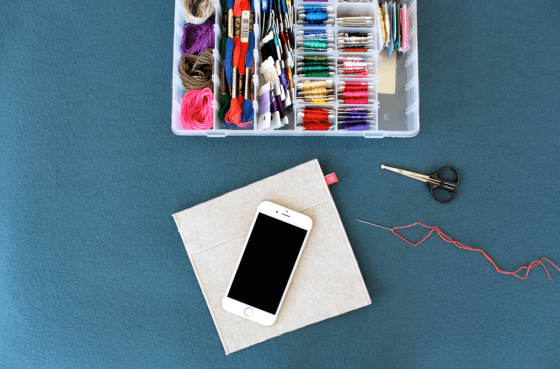
  • Felt (one or two colors)
  • Embroidery thread
  • Sewing needle
  • Scissors

Step 1: My step 1 might look different from your step 1 because I was working with an item I needed to deconstruct before I could re-construct it. I began by carefully taking out the stitches in the felt pouch and lying it flat. I laid my phone down over the felt to eyeball where I needed to cut. For an iPhone 6, measure your swatch to be 3 1/2 inches x 11 5/8 inches. (Note: This pattern can easily be adjusted to fit any cell phone, tablet, or personal device.)

Step 2: If you want to make a secondary pocket, cut another felt swatch of identical measurements. This could be the same color or a complementary color. Then, fold this swatch in half short ways and cut a diagonal line through both halves of the felt. (Since I didn’t choose the color of my felt, I decided to spruce things up a bit with fun coral-colored embroidery thread!)

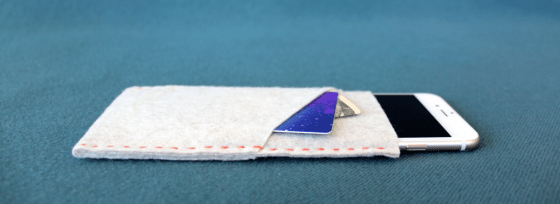
Step 3: Place the diagonally cut felt over the rectangular felt and carefully line up the edges. If anything does not line up correctly, this is the time to fix it. Thread the sewing needle with embroidery thread and begin sewing up the first side of the sleeve. You can use any stitch for this, or even a sewing machine if you know how to use one! I decided to stick to the basics: in one side, out the other, etc.

I used an invisible stitch to begin and end the two sides so that there wouldn’t be any visible knots or loose string (this sleeve is two-sided, after all!). When beginning, I entered through the inside of the sleeve, and at the end, I tied a knot between the two pieces of felt. These are very much “Victoria stitches,” as I truly had no idea what I was doing and made it up as I went. Much to my surprise, these stitches seem sturdy!

Step 4: Make sure that everything fits nicely in your new felt sleeve! I wanted my phone to fit snugly in the pouch so that it doesn’t fall out if held upside-down. The beauty of not having a top closure is that you can charge your phone and/or listen to music with headphones while it is in the sleeve! It will make the perfect companion for your jacket pocket, bag, or purse.

The best part about this project? It cost me $0. All because I saved that felt pouch from Madewell. Here’s to hoarding crafting supplies forever… and ever.

Be sure to tag your own DIY projects with #scissorsandsage!

Design inspiration for this project came from Poppytalk.

Embroidered Valentine’s Card Crafting

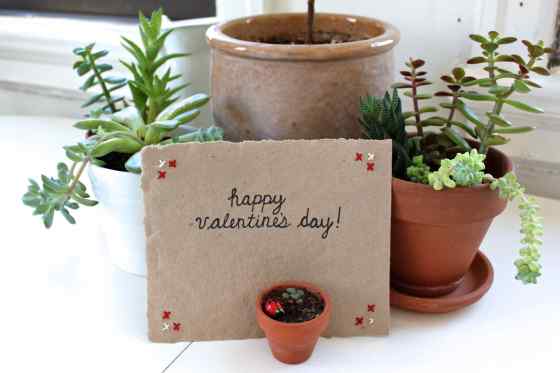
Last weekend, Anne and I set up shop during the Super Bowl to make a whole bunch of valentines. Granted we like the experience of the Super Bowl (the food is clearly the best part), it’s the last thing either of us knows anything about. So we got out some of our crafting materials, splayed them out over our dining table, and had a blast together!

This embroidered valentine is actually one I made the following day. I knew I wanted to photograph it, and nighttime lighting wouldn’t do. Let me say this: I have never embroidered before. I would consider this DIY to be in the “easy” category, and so should you! This is a great way to dip a toe in if you’ve been thinking about trying embroidery. The supplies needed are few, so let’s go ahead and get started!

Materials:

  • Thick paper
  • Pencil
  • Sewing needle
  • White embroidery thread (about 18 inches)
  • Red embroidery thread (about 24 inches)
  • Scissors
  • Sharpie for writing your message

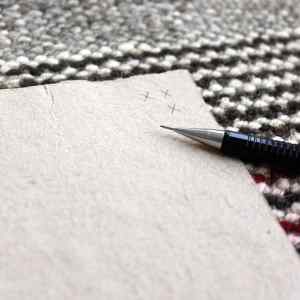
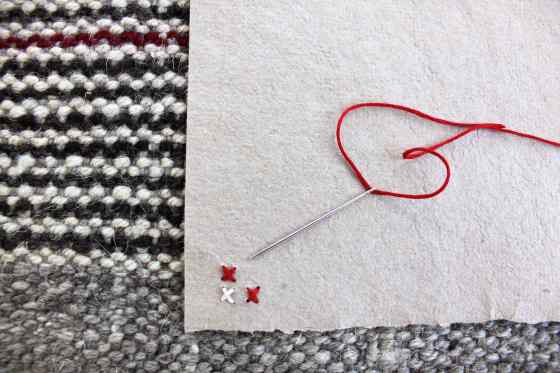
Step 1: Turn over the paper, and with a pencil mark three little Xs in each corner of the card. This simple border will ensure first-time embroidery success!

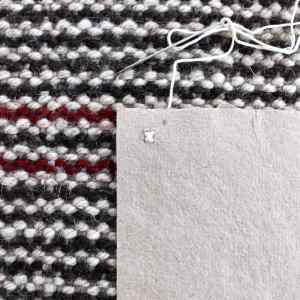
Step 2: Thread the sewing needle with white embroidery thread. Tie one small knot right near the end of the thread.

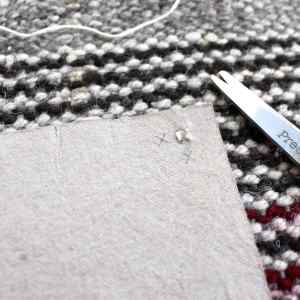
Step 3: Insert the sewing needle into the backside of the paper at one corner of an X. Pull thread all the way through until you reach the knot. Re-insert the needle into the frontside of the paper at the opposite corner of that X. From the back, sew into a third corner of the X. Finally, push the needle through the fourth and final corner of the X. Make sure the thread is taut but not too taut, as this could rip the paper. Tie another small knot on the back of the paper. Cut thread.


Step 4: Tie a new knot at the end of the white thread. Continue onto the next white X and repeat step 3. (My Xs got better as I continued to make them. You’ll have the art perfected by the time you finish all twelve!)

Step 5: When you have finished making the white Xs, switch to the red thread and continue until all of the Xs have been sewn. Note that I chose to take a shortcut here. Instead of making individual thread cuts for each red X, I made only one thread cut for each corner of the paper. Meaning, I sewed two red Xs together in each corner. By combining two Xs together, I saved myself both time and fuss.

Step 6: Write your message! No matter who it’s for, the recipient is going to love this handmade card. Mine is more of a postcard-style, but you could easily add some fun paper to the other side to cover the back end of the stitches. I personally like the rustic, homemade feel of it!

Some other notes:

  • My particular card isn’t going in the mail. If yours is, you can easily make your own matching envelope using this technique.
  • The paper I used was a perfect thickness. Anne actually made this paper a few years ago! I found that the closer I got to the edge of the paper, the more I needed to support it with my hands. That way, I could ensure the paper didn’t rip or tear.
  • Have fun with it! Since you’re making the same X shape over and over again, you will soon get good and move pretty quickly. This card took me about 30 minutes.

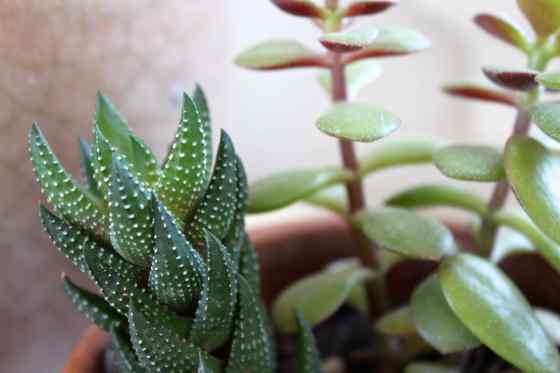
Share your own Valentine’s cards using #scissorsandsage. I may feature some of your projects on Instagram! And just because succulents photograph so well…

Floral Arranging 101 With: Elaine Burns

One of my New Year’s resolutions for Scissors & Sage is to invite other people to guest post throughout the year. I so enjoy getting to learn from crafters and bakers and the like, and thought that this would be a nice way to collaborate. The first guest blog post this year is from my friend Elaine.

Elaine and I went to college together. Have you ever had the experience of knowing someone through a friend, but not really knowing them, only to find out later that you two have so many similar interests? That’s me and Elaine. I hope to craft with her in real life someday. She lives in Brooklyn, works for J.Crew, and is an overall lover of crafting. She knits, crochets, bakes, arranges flowers, and embroiders, among other nifty talents. Today she is here to teach us how to make our very own floral arrangements! I can’t wait to give this a try.

From Elaine: It’s the dead of winter and you’re counting down the days until spring — only three more months until warmth! While it may be desolate outside, a perfect (and foolproof) way to bring the promise of springy days ahead into your or a friend’s home is with a unique flower arrangement. You really can’t go wrong with some added pops of color.

Selecting Flowers

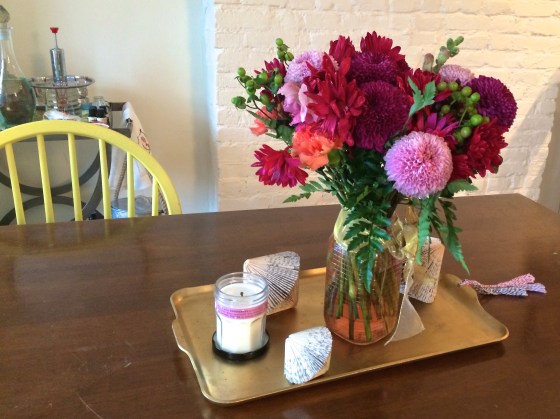
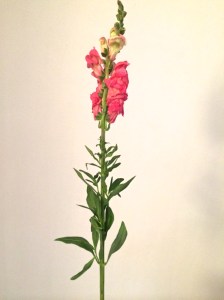
For this arrangement, I spent about $50 at my local grocery store and purchased six bouquets of flowers. When selecting, I aim to assort a variety of textures and shapes: long and skinny (like snap dragons) and round and dome-like (like dahlias).  Next, I focus on a color palette.

In addition to selecting the focus-flowers for an arrangement, I am also sure to select some foliage flowers or plants to add needed balance. I used hypericum berries, as well as leaves from carnation stems, in this arrangement.

Preparation

Once you have the flowers back at home, immediately take them out of the cellophane/paper wrapping, cut the stems at an angle (do not trim the stems at this point), and stick the flowers in a bucket of water. Grab a pair of scissors or a knife — it’s now time to process the stems.

When you bring home a bouquet of flowers from the grocery store or farmer’s market, they are typically unprocessed, meaning they still have all of their leaves, nubs, and thorns. Use your hands or a knife/scissors to clean these leaves from the stems. This will make it easier (and less messy) to assemble your arrangement.
 

Assembling the Bouquet

When I make a vase arrangement, I find it easiest to make a traditional bouquet as my skelton and then add embellishments from there.

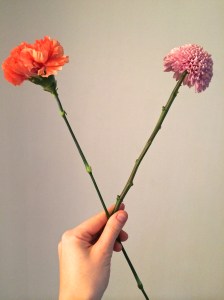
To start a bouquet, take two flowers and cross them in an “x” shape. Then, rotate both flowers clockwise. The flower that was on top (in this case, the orange carnation) will now be behind the second flower (here, the light purple dahlia). Repeat again with a third flower: add to the “x”, then rotate clockwise. This rotation is important because it creates the spiral shape of a traditional bouquet.


Keep adding flowers; the more the better! With the first ten or so flowers you add, the spiral bouquet shape won’t be immediately apparent. But, the more you add, the more pronounced the shape will become.
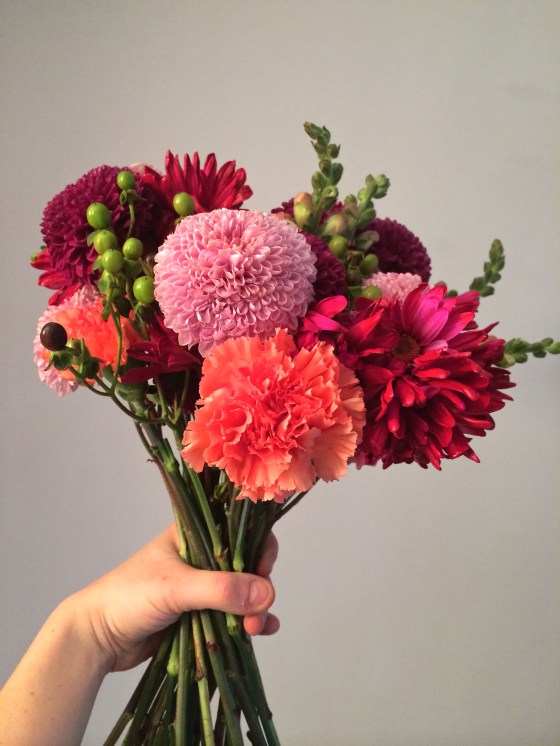
Once you have added all of the flowers to your bouquet, you can trim the stems (cut at an angle) to fit into your vase of choice. I typically go for mason jars. The one I used here is a vintage find!
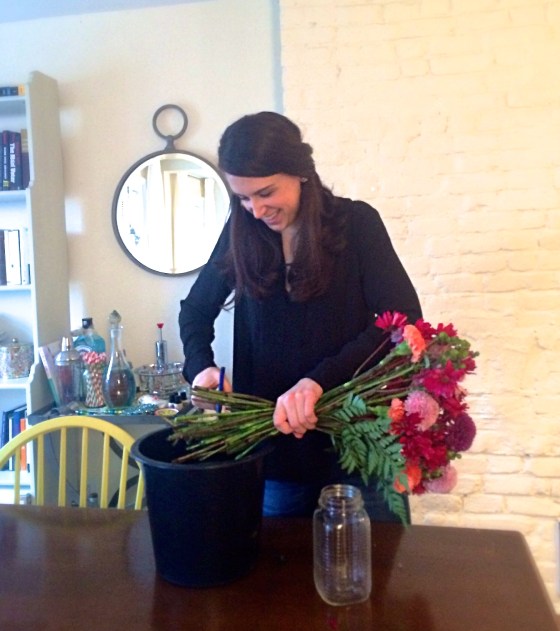
From here, it’s a matter of finessing your arrangement. Aside from processing the stems, I usually spend the most time on this step. Some flowers probably slipped below others while you were assembling the bouquet, so they will need to be pulled up. If you notice that one side of the bouquet is very heavy in one color, you may need to remove some stems and place them elsewhere.  If that is the case, just be sure to continue following the twisted shape of the bouquet. You really can’t go wrong!

Bonus Bud Vase

When processing and arranging a large display, you will inevitably accumulate a collection of smaller buds, extra foliage, or a flower or two that didn’t make it into my final arrangement. Bonus!!

These smaller flowers can then be used to filled smaller bud vases (of which I now have a growing collection) and used to pepper the rest of your home with some added color and texture. I usually make a loose bouquet shape before sticking these into a vase.

So, happy winter, all! Here’s hoping your home feels a little bit brighter and warmer with the addition of a new floral arrangement.

Flowers Used

Dahlias, Carnations, Snapdragons, Daisies, Hypericum Berry

All Photos taken by Elaine Burns